Loft conversions in Iffley, Oxford.
Iffley is a village that became part of the city without losing its shape. That is why a loft conversion here is less about the postcode and more about which side of the village your house sits on, and what the roof above it is actually doing.
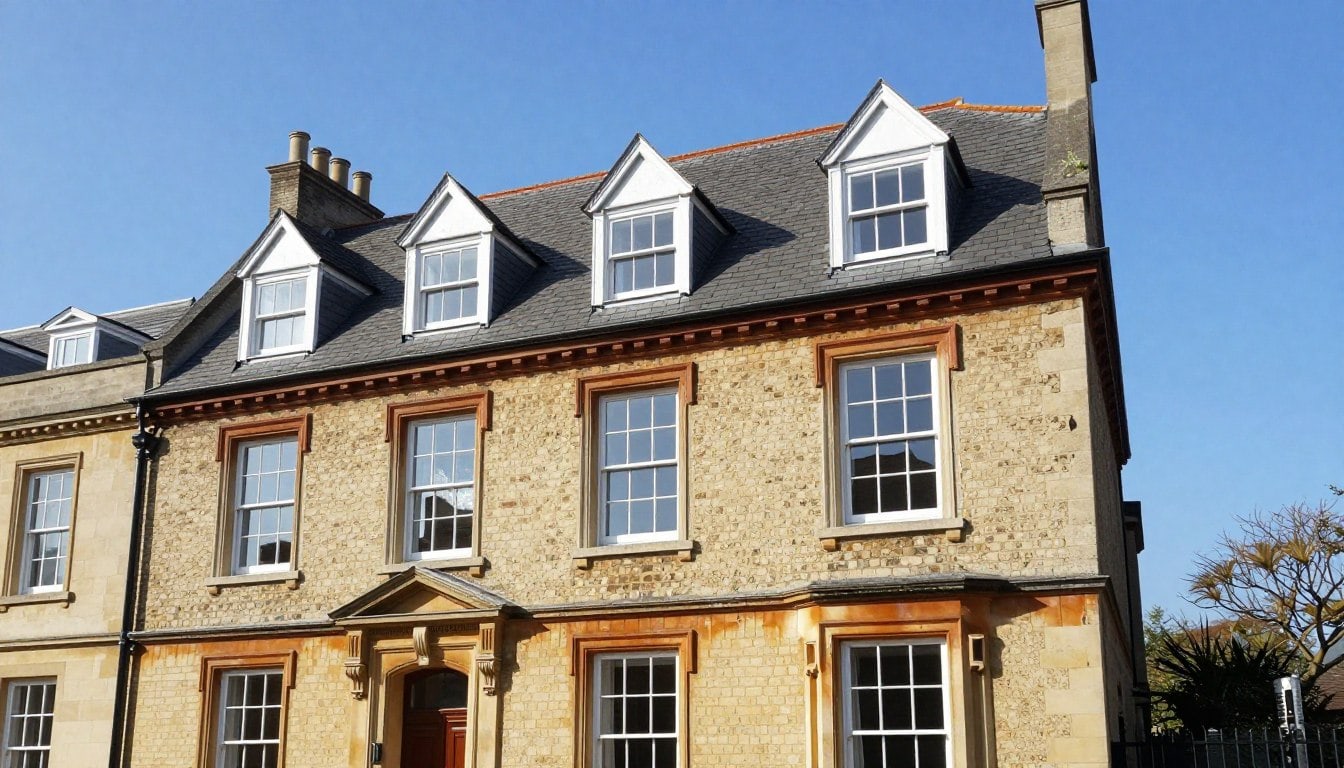 Illustrative image
Conservation
Iffley conservation area
Two contexts
Village core and Iffley Road
Mixed roofs
Roof type decides the route
Access
Narrow lanes need planning
A village core with a city road attached
Iffley has an unusual character because it contains two quite different building contexts within a short walk. Around the village centre and the church, the streets are older, tighter and more varied, with roofs that have been altered over a long period. Along Iffley Road, the approach into the city is lined with a more continuous run of urban housing.
For a loft conversion that difference matters. A house in the older core usually needs a more careful design conversation about how the roof is altered, while a house on the main road may offer a simpler structural starting point and a more predictable volume to work within.
Either way, the starting point is the same: measure the roof, check the head height, and establish what the structure can take before anyone draws a room.
- Older buildings in the village core, more continuous housing on Iffley Road
- Roof pitches and head heights vary considerably between the two
- Chimneys and party walls checked early on older properties
- Rooflight conversions often suit the lower-impact end of the range
Two conservation areas meet Iffley
Oxford City Council records Iffley as one of the city's 18 conservation areas, and the approach along St Clement's and Iffley Road is covered by a separate conservation area. Between them, much of the built fabric of the area sits within a protected designation.
The practical consequence is that the right to extend or alter a roof under permitted development is withdrawn. A householder planning application is needed for a dormer or roof alteration, and the design is assessed on its effect on the character and appearance of the area rather than just on volume.
That does not make a conversion unlikely. It means the materials, the window proportions and the position of the dormer along the roof carry real weight. Rooflight-only schemes are often the easiest to justify because the external roofscape changes very little.
- Iffley conservation area recorded by Oxford City Council
- Roof alterations need planning permission inside a conservation area
- Design judged on effect on the area's character
- Rooflight schemes usually the least visible option
Official guidance
- OXFORD CITY COUNCIL — Iffley conservation area
- OXFORD CITY COUNCIL — conservation areas in Oxford
- OXFORD CITY COUNCIL — pre-application planning advice
Official sources. Conservation area status is confirmed for your specific address before design work begins.
Working in narrow lanes and tight frontages
Access is the practical question in Iffley, as it is across much of old Oxford. The lanes near the village centre are not designed for scaffolding lorries or large deliveries, and some frontages offer nowhere obvious to put a skip.
We plan the site setup before work starts: where the scaffold lands, how materials reach the roof, how waste leaves, and how neighbouring property and parked cars are protected while it happens. On a village street that planning is as important as the build sequence.
Where access is genuinely restricted, the programme changes rather than the standard of work. Materials arrive in smaller loads and are carried further, which takes longer and needs to be reflected honestly in the programme rather than discovered on site.
- Scaffold and skip positions agreed in advance
- Materials planned in smaller loads where access is tight
- Neighbouring property and parked cars protected
- Roof openings weatherproofed quickly to limit exposure
A clear process. No guesswork.
From the first survey to the final handover, every stage is owned, sequenced and explained.
First conversation
Tell us about the house, the space you need and any constraints you already know about.
Survey & feasibility
We measure the roof, check access and explain which routes are realistic for the property.
Design & quotation
The scope, specification, assumptions, exclusions and payment stages are set out in writing.
Approvals & programme
Planning, structural design, party wall and Building Regulations requirements are coordinated.
Build & handover
The work is sequenced carefully, inspected at the right stages and explained at completion.
Things worth asking before you begin.
If your question is not here, ask us directly. We would rather explain the position early than have it become a surprise later.
Ask a questionDo I need planning permission for a loft conversion in Iffley?
Iffley is a conservation area, so the permitted development right to extend or alter a roof is withdrawn. A householder planning application is normally needed for a dormer or roof alteration. We confirm the position for your specific address before design work begins.
What if my house is on Iffley Road rather than in the village?
The approach along St Clement's and Iffley Road falls within a separate conservation area, so roof alterations there also need permission. The building context is different, but the planning position is broadly similar.
Which conversion suits an older Iffley house?
It depends on the existing roof. Rooflight conversions are often the least visible option and can be easier to justify. A rear dormer is frequently achievable where it is modest and set away from the street, provided the materials and proportions are handled carefully.
Is access a problem in Iffley?
It can be, particularly on the narrower lanes near the village centre. Scaffolding, deliveries and waste removal all need planning in advance. Where access is restricted the programme usually lengthens rather than the work being compromised.
Related guidance and services
Let’s talk about the space above your ceiling.
Tell us about your house and what you would like to create. We will explain the realistic options, the approvals likely to be needed and the next practical step.
Oxford & Oxfordshire · Local team